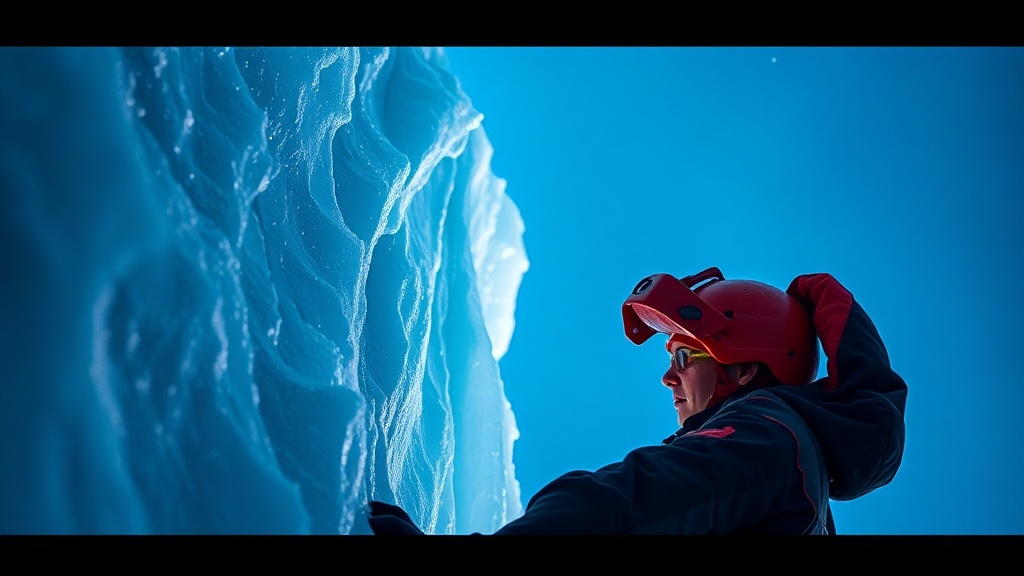
The Silent Killer in Ice Climbing: Why Your Grip is Failing You

Quick Tip
Relax your grip between swings and let blood flow back into your forearms—maintaining 60% grip pressure instead of 100% will double your endurance on long pitches.
This post breaks down why grip strength fails during ice climbs — not from weak fingers, but from poor tool handling and forearm pump. The difference between sending a route and taking a whipper often comes down to how you hold the ice tools, not how hard you can squeeze.
Why Does Grip Fail on Ice Climbs?
Grip failure in ice climbing rarely happens because of insufficient finger strength. The real culprit is sustained isometric contraction — holding tools overhead for minutes at a time without rest. Unlike rock climbing, where you can shake out between moves, ice tools stay loaded constantly.
Here's the thing: ice climbers grip harder than necessary. Anxiety drives white-knuckle squeezing, burning through forearm reserves faster than the climb demands. That overgrip — especially on mixed terrain — drains the flexor digitorum profundus long before the pitch ends.
What Are the Best Exercises for Ice Climbing Grip?
Dead hangs on a hangboard won't save you. Ice climbing demands open-hand strength and wrist stability under load — not crimp power.
That said, these drills actually transfer to the ice:
- Offset hangs: Hang from a bar with one arm higher than the other. Mimics the uneven load of matching tools on tricky ice.
- Wrist roller work: Builds the extensors that oppose your gripping muscles. Balanced forearms last longer.
- Tool-specific rows: Attach weight to an ice tool handle. Row while maintaining the exact wrist angle you'd use on lead.
The catch? Most climbers train like rock climbers. Ice demands different stimulus — static holds over dynamic movement, wrist extension over finger strength.
| Training Method | Best For | Equipment |
|---|---|---|
| Offset hangs | Mixed terrain matching | Pull-up bar |
| Wrist roller | Forearm endurance | Rogue Wrist Roller |
| Tool rows | Specific strength | Petzl Nomic + weight plate |
| Rice bucket | Active recovery | 20lb bag rice |
How Do You Prevent Forearm Pump on Long Ice Routes?
Relax the pinky finger. Seriously — that's the grip hack most climbers miss.
The pinky generates disproportionate flexor tension. By consciously relaxing it (keeping only the index, middle, and ring fingers engaged), you reduce overall forearm contraction by roughly 30%. On a 60-meter pitch, that adds up.
Worth noting: grip savers like the Petzl Nomic feature ergonomic handles designed to reduce hand fatigue. The Black Diamond Viper offers a similar advantage with its natural hand position. These aren't marketing fluff — the geometry matters when you're 40 feet above your last screw.
Other tactics that work:
- Rest at stances: Fully extend one arm, let the tool hang from the wrist strap, and shake the other hand vigorously. Alternate every 30 seconds.
- Breathe through the grip: Exhale deliberately when placing screws. Tension and breath-holding compound forearm fatigue.
- Chalk matters: Wet gloves or sweaty palms inside Outdoor Research Arete Gloves destroy friction. A thin layer of liquid chalk on the tool handles helps — yes, even in winter.
The Silent Killer isn't weakness. It's mismanagement — gripping too hard, too long, with the wrong muscles firing. Fix the technique, and the endurance follows.