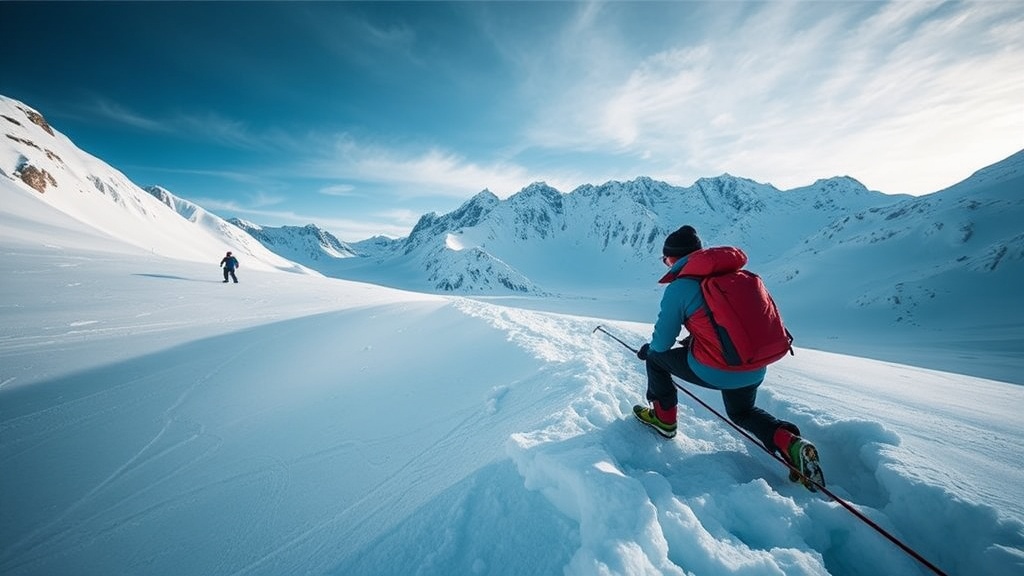
Master the Figure-Four Rest to Conquer Longer Ice Routes

Quick Tip
Hook one axe over your shoulder and cross the opposite leg over the planted tool's shaft to create a stable, no-hands rest position that lets your forearms recover on steep ice.
This post breaks down the figure-four rest—a specific body position that lets ice climbers offload weight from burning forearms during steep pitches. Long routes demand smart energy management. Without efficient resting techniques, pump builds fast and sends cascade. The figure-four creates a stable position where one leg supports body weight while both arms recover.
What Is the Figure-Four Rest in Ice Climbing?
The figure-four rest is a body position where one leg crosses over the opposite arm, creating a triangle of support that locks the climber in place. Named for the shape the limbs form, this technique transfers load from the arms to the skeleton. On overhanging or vertical ice, that shift matters.
Ice climbers borrow this move from mixed climbing and dry-tooling circuits. Unlike rock climbing—where you might sink a kneebar or find a foothold to shake out—ice offers few natural rests. The figure-four creates one artificially. You stab an ice tool, place a foot, then cross the opposite leg over that arm and wedge the boot against the tool shaft or your own thigh.
The position isn't comfortable. (Comfort is overrated on WI5 anyway.) But it works. Blood flows back into the forearms. The grip relaxes. You get twenty, maybe forty seconds of genuine recovery.
When Should You Use a Figure-Four on Ice?
Use the figure-four when the terrain steepens and no natural rest stance exists—typically on vertical or overhanging sections where both tools are planted but footholds are marginal. The technique shines on long pitches where the pump creeps in and every move burns more gas than the last.
Here's the thing: not every ice route suits this rest. It demands:
- Steep enough terrain—think WI4 and up
- Good tool placements that can bear some outward pull
- Front-pointing footholds at roughly hip height
- Enough room to cross the leg without dislodging the tool
The catch? Boot placement matters. Crampons bite differently depending on boot model. The Scarpa Mont Blanc Pro and Petzl Dartwin combo offers precise front-pointing that locks securely for figure-four positions. Bulkier boots struggle—too much material between foot and tool.
How Do You Execute a Proper Figure-Four?
Start by setting a solid high tool with the dominant hand. Place the inside foot on a secure foothold at hip level or slightly higher. Bring the outside leg up and cross it over the tool arm, hooking the calf or ankle behind the forearm. Drop weight onto that leg. Let the arms hang.
Worth noting: the tool placement angle changes. Instead of pure downward load, the pick now sees some outward force. Test it gently. Some ice—brittle chandelier or sun-baked columns—won't tolerate the multi-directional pull.
| Boot Model | Front-Point Precision | Figure-Four Suitability |
|---|---|---|
| Scarpa Mont Blanc Pro | Excellent | Ideal |
| La Sportiva Nepal Cube GTX | Very Good | Good |
| Scarpa Phantom Tech | Good | Fair—too flexible |
Practice the figure-four at the crag before committing on a long alpine route. Start on top-rope. Find a steep section with good ice and rehearse the sequence: tool, foot, cross, drop. The movement feels awkward at first—unnatural, even. But once the body learns the position, it becomes automatic.
The best ice climbers aren't the strongest. They're the ones who rest before the pump takes over. Master the figure-four and those long pitches start feeling shorter.