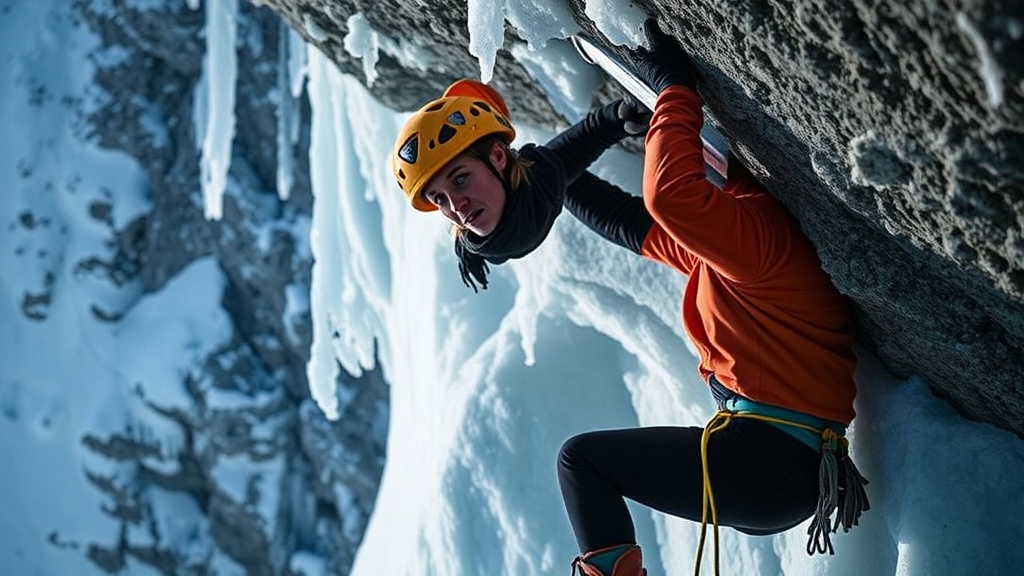
Dry-Tooling Drills: Building Ice-Climbing Strength Before Winter Hits

This post breaks down dry-tooling drills — climbing on rock with ice tools and crampons — that build the specific strength, lock-off power, and tool dexterity needed for steep ice and mixed routes. If winter's still months away, these drills will close the gap between gym fitness and actual ice-climbing performance so you're not starting from zero when the first freeze hits.
What Is Dry-Tooling and Why Should Ice Climbers Care?
Dry-tooling is the practice of using ice tools and crampons on bare rock, indoors or out. It mimics the movement patterns of steep ice and mixed climbing without requiring frozen conditions. The short answer: it matters because ice climbing demands a completely different set of muscles than rock climbing or general gym training.
When you're swinging a tool overhead — say a Petzl Nomic or Black Diamond Fusion — the forearms, lats, and rotator cuffs work under loads that pull-ups alone can't replicate. Add the instability of front-pointing on small edges, and your calves, core, and hip flexors fire in ways that standard leg presses never touch. Dry-tooling bridges that gap. It gives you time to groove the mechanics — hooking, stein pulls, figure-fours — before your life depends on them at the sharp end of a waterfall.
Here's the thing: many climbers show up to Ouray or Valdez in December with strong fingers from a summer of bouldering, yet they pump out on the third pitch of WI4. The missing piece isn't raw strength. It's specific strength — the kind built through repeated, intentional dry-tooling drills.
Can You Train Ice Climbing Strength Without Actual Ice?
Yes. You can build most of the physical qualities needed for hard ice and mixed climbing using dry-tooling drills at a rock crag, home woody, or dedicated ice gym.
The key is structuring your sessions around movements that transfer directly to ice. That means less emphasis on max-pull bouldering and more on sustained lock-offs, tool placement accuracy, and recovery while hanging from tools. Below are four proven drills, ordered from foundational to advanced.
1. Tool Hangs and Shake-Outs
Find a horizontal roof edge or sturdy beam. Place both tools (ideally matched pair like the Grivel Dark Machine) on the edge and hang with straight arms for 20 seconds. Rest 40 seconds. Repeat for 6–8 rounds.
The goal isn't maximum time-under-tension. It's learning to relax the grip, breathe, and shift weight onto the feet — exactly what you'll do on a long ice pitch. As you improve, progress to one-arm hangs with a straight arm and the other hand shaking out. Keep the shoulders engaged. Don't sag.
2. Lock-Off Ladders
Set a line of five to seven tool placements on a vertical or slightly overhanging wall. Climb the ladder by locking off each tool placement for a full two-count before reaching for the next hold. The catch? Your feet must stay on small edges or footholds (no smearing on the wall).
This drill builds the static strength needed for high-stepping on ice pillars and placing screws at full extension. If the movement feels easy, add weight in a vest or slow the tempo to a three-count lock-off. If you're training at home, the Beastmaker 1000 Series hangboard can substitute for tool placements — thread a sling through the center jug and clip your tool to it.
3. Figure-Four and Stein Pull Repeats
On a steep overhang, practice figure-four moves (one leg over the opposite arm) and stein pulls (pulling down on a tool already placed above you) for sets of three to five repetitions. Rest fully between efforts. These are high-skill, high-output movements common in modern mixed climbing.
Worth noting: dry-tooling outside on established routes (places like the Adirondacks' Chapel Pond or Vail's Rigid Designator Amphitheater) often provides fixed anchors and bolted mixed lines. Always check local ethics — some crags ban dry-tooling on shared rock climbs.
4. Campus Boarding With Tools
Campus rungs aren't just for rock climbers. Clip lightweight ice tools (dull the picks first) to a use or hold them directly and run simple 1-5-9 campus ladders. This isn't about max reach. It's about explosive recruitment and teaching the nervous system to fire the pulling muscles under the unique lever arm of an ice tool.
Start on large rungs — the Metolius Wood Grips work well — and keep the volume low. Two to three sets of two to three reps is plenty. Stop at the first sign of elbow tweakiness.
What Gear Do You Need for Dry-Tooling Training?
You don't need a full alpine rack to start. A basic dry-tooling kit includes a pair of modern mixed tools, crampons with replaceable front points, rock shoes or light mountaineering boots, and protection appropriate for the venue.
Here's a practical breakdown of what works and what doesn't:
| Gear Category | Best Options | Budget Alternative | Notes |
|---|---|---|---|
| Ice Tools | Petzl Nomic, Black Diamond Fusion | Petzl Quark (with weights removed) | Look for an aggressive pick curve and ergonomic handle |
| Crampons | Black Diamond Stinger, Grivel Rambo 4 | Petzl Lynx (mono-point setup) | Mono-points offer better precision on rock edges |
| Footwear | La Sportiva G5, Scarpa Phantom Tech | Old rock shoes with stiff midsoles | Light boots reduce leg pump during long sessions |
| Protection | Quickdraws, ice screws for hooking practice | Homemade wooden hooks on a home wall | Never dry-tool on routes you can't protect safely |
One detail often overlooked: dull your picks if you're training on rock regularly. A sharp pick bites too deep, making extraction a nightmare and damaging the rock. Many climbers keep a dedicated "rock pair" of tools with filed-down tips and a separate "ice pair" for winter.
How Should a Dry-Tooling Training Cycle Look?
A twelve-week pre-season block works well for most climbers. The first four weeks build volume and movement literacy. The middle four weeks increase intensity and introduce power-focused drills. The final four weeks taper volume and sharpen route-reading skills on harder dry-tooling problems.
That said, recovery takes longer in dry-tooling than in rock climbing. The loads on the elbows, shoulders, and fingers are unforgiving. Most athletes see the best results with two dedicated dry-tooling sessions per week, supplemented by two general strength sessions (squats, deadlifts, weighted pull-ups) and one mobility day.
A sample week might look like this:
- Monday: Tool hangs, lock-off ladders, core work
- Tuesday: Lower-body strength — front squats, Romanian deadlifts, calf raises
- Wednesday: Rest or light yoga
- Thursday: Figure-four/stein pull technique session on steep terrain
- Friday: Upper-body pulling strength — weighted pull-ups, rows, shoulder prehab
- Saturday: Outdoor dry-tooling on rock or a long mixed route
- Sunday: Full rest
What Are the Biggest Mistakes Beginners Make?
The most common error is treating dry-tooling like rock climbing. The movement is different — more static, more shoulder-intensive, more dependent on precise tool placement. Swinging wildly at the wall wastes energy and destroys the rock.
Another mistake? Neglecting the feet. Strong arms can mask terrible footwork for a while, but on long ice routes, efficiency comes from pushing with the legs, not pulling with the arms. Drill good habits early: place the tool, set the feet, stand up, relax the grip.
Finally, many climbers skip the protective gear. Even "easy" dry-tooling routes produce awkward falls — upside-down, backward, into your own tools. Wear a helmet. Use a spotter when possible. And check that fixed anchors are solid before committing. The American Alpine Club offers excellent resources on mixed climbing safety and anchor standards.
Where to Train If You Don't Live Near Ice
Not everyone has Valdez in their backyard. The good news: dry-tooling options are expanding. Dedicated ice climbing gyms like Ice Factor Kinlochleven in Scotland and Ouray Ice Park (which offers dry-tooling clinics in fall) provide coached access to mixed terrain. In the U.S., many rock gyms now set dry-tooling routes on structural columns or allow tool use on specific spray walls.
For home training, a simple wooden beam mounted in a garage works surprisingly well. Add a few screw-in holds at various angles and you've got a lifetime of lock-off practice. The REI Co-op journal has a solid guide to building basic dry-tooling structures at home.
Building Mental Fitness Alongside Physical Fitness
Dry-tooling isn't just physical prep. It's mental rehearsal. The sound of steel on rock, the visual search for a hook, the micro-adjustments of body position — these all trigger the same stress responses you'll feel on a thin ice lead. Repeating them in a low-consequence environment builds familiarity, and familiarity breeds calm.
That said, don't expect overnight transformation. Dry-tooling feels weird at first. The tools wobble. The front points skate. Your forearms scream after ten minutes. Stick with it. Each session adds neural wiring that pays dividends when the temperatures drop and the ice forms up.
"The best ice climbers aren't the strongest in the gym. They're the ones who've grooved the movements so deeply that their bodies know what to do before their minds catch up." — Steve House, Training for the New Alpinism
For a deeper dive into periodized training for ice and alpine climbing, check out the protocols outlined by Uphill Athlete. Their mixed-climbing templates blend dry-tooling, strength work, and aerobic base building in a way that translates directly to long ice routes.
Winter waits for no one. Start the drills now, and when the first column forms, the tools will feel like extensions of your hands — not foreign objects you're still learning to trust.