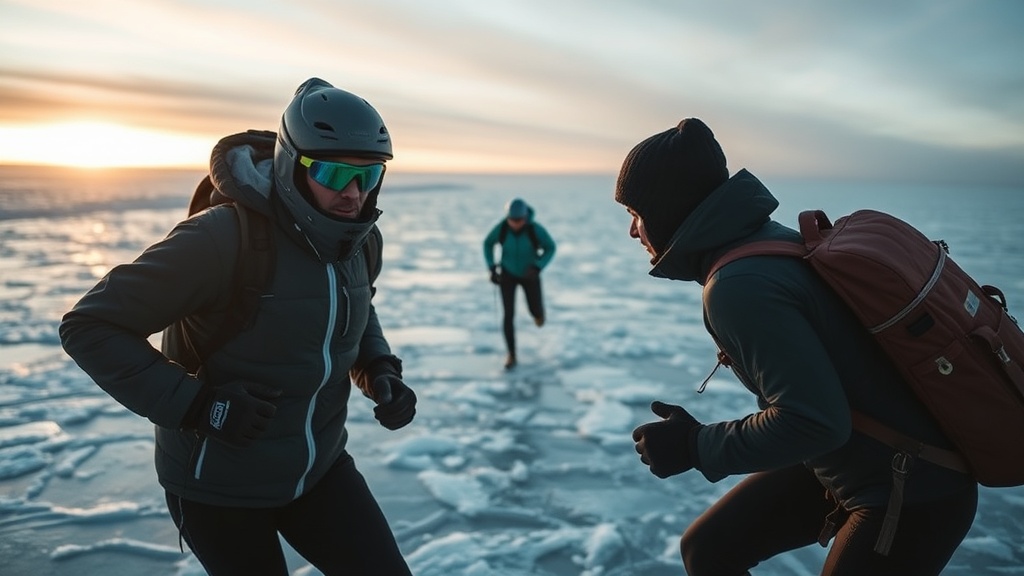
Build High-Volume Endurance for Long Ice Seasons

Why High Intensity Isn't Always the Answer
Most climbers assume that to get better at ice, you need to lift heavy weights or push explosive power. They think more muscle equals more ability. That's a mistake. In the real world of ice climbing—especially when you're deep in a multi-pitch alpine route—the bottleneck isn't your peak strength; it's your ability to resist fatigue over hours of sustained movement. If you can pull a massive move but your forearms turn to jelly ten minutes later, you haven't actually built a climbing engine. This post covers how to develop the aerobic capacity in your forearms and legs so you can stay moving when the temperature drops and the technicality rises.
Building a base of endurance requires a shift in mindset. You're moving from the realm of anaerobic power into the realm of aerobic capacity. This means training your body to clear lactic acid while you're still actively climbing. It's about efficiency, not just brute force. When you're stuck on a vertical pillar, you don't need to be a weightlifter; you need to be an engine that doesn't quit.
Can You Train Endurance Without Climbing Ice?
You don't need a frozen waterfall to build a massive engine. In fact, waiting for the perfect freeze to train is a losing game. You can build significant cardiovascular and muscular endurance through specific, repetitive movements that mimic the demands of the ice. One of the best ways to do this is through "pump training" on a hangboard or a specialized pull-up bar, but with a twist. Instead of short, intense bursts, you want long-duration, low-intensity hangs. This builds the capillary density in your forearms—the tiny blood vessels that bring oxygen to your muscles.
Try a protocol of "active recovery" climbs. If you have access to a gym, find a way to climb long, easy routes repeatedly without stopping. The goal isn't to reach your limit; it's to keep your heart rate in a steady zone while your muscles work. This builds that aerobic base. If you're stuck at home in Burlington, you can use a simple pull-up bar to perform high-volume, low-intensity hangs. Hang for 30-45 seconds, rest for 15, and repeat. This teaches your body to manage the buildup of metabolic byproducts.
For your lower body, don't overlook the legs. Ice climbing involves a lot of standing on small, precise edges. Strengthening your calves and quads through high-rep movements—like lunges or step-ups—will keep you steady when you're working through a difficult section. A strong base prevents the fatigue in your legs from traveling up into your core and eventually your arms.
How Long Should a Training Session Last?
If you're training for endurance, your sessions will naturally be longer than a standard strength session. You aren't looking for one or two heavy sets; you're looking for volume. A typical endurance session might last 60 to 90 minutes of continuous, low-intensity movement. This is different from a HIIT (High-Intensity Interval Training) session. In HIIT, you go all out and stop. In endurance training, you keep moving at a pace that feels sustainable but challenging.
A good rule of thumb is the "talk test." You should be working hard enough that your breathing is heavy, but you shouldn't be gasping for air. If you can't hold a brief conversation, you've moved too far into the anaerobic zone. You want to stay right on the edge of that line. This is where the real adaptations happen. According to the American College of Sports Medicine, aerobic training-induced adaptations are what allow for sustained-effort performance over long durations.
Structure of a Sample Endurance Session
To keep things organized, use a structured approach. Don't just wander around the gym or the crag. Follow a plan. Here is a basic template for a forearm endurance session:
- Warm-up: 15 minutes of easy movement (jogging, light climbing, or dynamic stretching).
- The Main Set: 4 sets of 5-minute "continuous movement." This could be climbing a long, easy route or doing repetitive pull-ups with a light weight.
- The Recovery: 2 minutes of active recovery between sets (walking, light stretching).
- The Finisher: 3 sets of 45-second hangs on a large edge to build local muscular endurance.
Remember, the goal is volume. If you find yourself failing a move because you're too pumped, you've gone too hard. Dial it back. You want to finish the session feeling like you could have done one more set if you absolutely had to.
What Is the Best Way to Track Progress?
You can't manage what you don't measure. For endurance, tracking your "time to failure" or your "recovery time" is much more useful than tracking how much weight you can lift. If you can do 10 sets of 2-minute hangs this month, but only 6 sets last month, you've made progress. Even if you aren't lifting heavier, your body is becoming more efficient at managing stress.
Keep a training log. Note the temperature, the duration, and how your forearms felt after the session. Did they feel a sharp, burning pump (which is fine) or a dull, heavy ache (which might mean you're overtraining)? This data is vital for long-term development. For more on how physical stress affects the body, check out the resources at Healthline regarding exercise-induced fatigue.
Don't fall into the trap of constant progression. In endurance training, there will be plateaus. That's part of the process. If you hit a wall, change the stimulus. Switch from hanging to weighted step-ups, or change the rest intervals. The key is to keep the stimulus fresh so your body doesn't become too efficient at the same old routine.