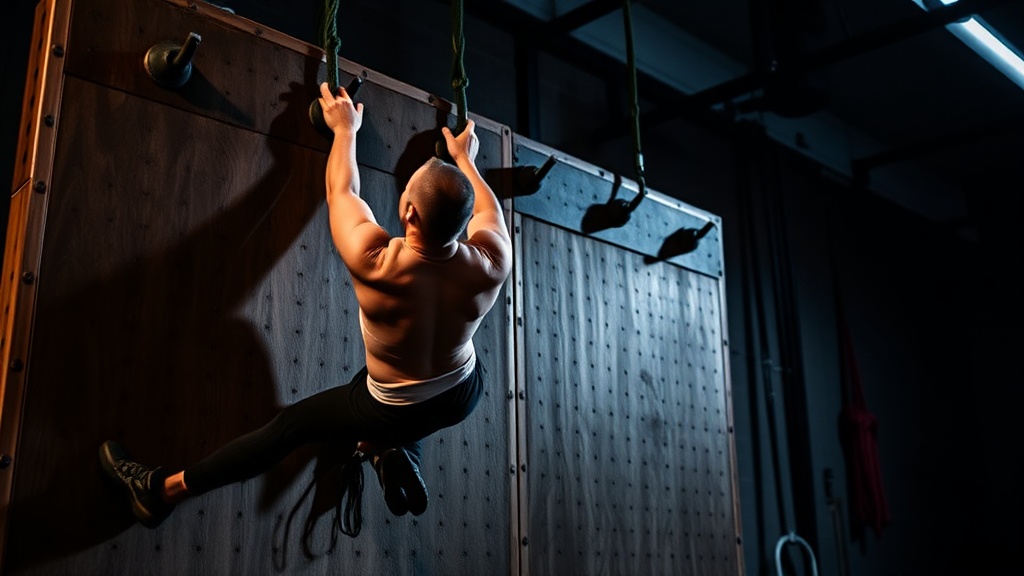
Build Grip Endurance Through High-Volume Hangboard Sessions

The metal of the hangboard feels cold against your fingertips, a stark contrast to the stinging wind hitting your neck outside. You hang there, suspended by nothing but your own weight and a few millimeters of skin, feeling the slow, rhythmic pump build in your forearms. This isn't about a quick burst of power; it's about the long, grueling grind of endurance. This guide breaks down how to use high-volume hangboard sessions to build the grip endurance required for long, technical ice climbs and steep mixed routes.
Most climbers focus on max strength—the ability to pull through a single hard move. But if you've ever been halfway up a vertical pillar of ice and felt your forearms turn into solid blocks of granite, you know strength isn't everything. You need endurance. You need the ability to sustain a grip through repeated movements and long rests. High-volume hangboarding targets the metabolic capacity of your forearm muscles and the efficiency of your tendon recovery.
Why Should I Use a Hangboard for Endurance?
Hangboarding for endurance builds the capacity of your muscles to work through lactic acid buildup and improves the efficiency of your forearm blood flow. While traditional "max hangs" focus on recruiting as many muscle fibers as possible, high-volume training focuses on the oxidative capacity of those muscles. It's the difference between a sprint and a marathon. You're training your body to keep the grip even when the burn starts to scream.
When you're on a vertical ice line, you aren't just fighting gravity; you're fighting the physiological fatigue that comes from repetitive tool swings and weight shifts. If your grip fails, your tool might pop, and that's a bad day. By using a hangboard—specifically a board with various edge sizes—you can simulate the sustained-tension environments found in real-world climbing.
There are two main ways to approach this. You can go the "strength-endurance" route, which involves longer hang times on medium edges, or the "aerobic-capacity" route, which involves shorter, more frequent hangs. Most people find that a mix of both provides the best results for ice and mixed climbing.
The Difference Between Strength and Endurance Training
It's easy to get confused between these two modalities. Think of it this way: strength is your peak power, while endurance is how long you can hold that power. If you want to climb a hard grade, you need strength. If you want to finish the climb without your hands feeling like they're on fire, you need endurance.
- Strength-Endurance: Longer hangs (10–30 seconds) on edges that are slightly too small to be comfortable. This builds the ability to hold a position under tension.
- Aerobic-Capacity: Shorter, more frequent hangs (5–10 seconds) with long rest periods or very high frequency. This trains the muscles to clear metabolic byproducts quickly.
If you're transitioning from a heavy lifting background, don't ignore the importance of protecting your tendons with eccentric loading. High-volume training can be taxing on the connective tissue, so a slow approach is always better than a fast one.
How Often Should I Hangboard for Endurance?
You should hangboard for endurance no more than two to three times per week to allow for adequate muscle and tendon recovery. Overtraining is a real risk when you're increasing volume, especially if you are also climbing several days a week. Your muscles might feel ready to go, but your tendons—which have much lower blood flow—take longer to adapt.
A typical week for a serious climber might look like this:
| Day | Activity | Focus |
|---|---|---|
| Monday | Hangboard (Volume) | High-volume, medium edges |
| Tuesday | Ice Climbing / Projecting | Technical skill and power |
| Wednesday | Rest | Full recovery |
| Thursday | Hangboard (Capacity) | Short hangs, high frequency |
| Friday | Climbing / Cardio | Aerobic base |
| Saturday | Outdoor Climbing | Real-world application |
| Sunday | Rest | Total rest |
The catch? Most people fail because they try to do too much too soon. If you start doing 45 minutes of intense hangboarding every single day, you'll likely end up with tendonitis or a complete lack of progress. Listen to your body. If your grip feels "hollow" or weak during a warm-up, skip the session.
What Are the Best Hangboard Protocols?
The best protocols involve a mix of "Long Hangs" for sustained tension and "Repeaters" for metabolic capacity. You should use a variety of edges—from 20mm down to 10mm—to ensure you're training different aspects of your grip. A good tool for this is the Beastmaker or a similar high-quality wooden board, as wood is often more forgiving on the skin and joints than plastic.
Here are two specific routines you can implement:
- The "Steady State" Protocol (Strength-Endurance):
- Find an edge that is challenging but doable for 15 seconds.
- Hang for 20 seconds.
- Rest for 40 seconds.
- Repeat 6–8 times.
- Rest 3 minutes.
- Complete 3 total sets.
- The "Rapid Fire" Protocol (Aerobic-Capacity):
- Find a medium edge (around 15-18mm).
- Hang for 7 seconds.
- Rest for 3 seconds (active rest).
- Repeat 6 times (this is one "set").
- Rest 2 minutes between sets.
- Complete 4–5 sets.
The second protocol is brutal. It's designed to create a massive pump, which mimics the feeling of a long, technical ice pitch where you can't quite shake out your hands. It's uncomfortable, but that's the point. You're teaching your body to manage the buildup of lactic acid while still maintaining a functional grip.
Make sure your technique is sound. Don't just hang like a dead weight; engage your shoulders. You want to be hanging from your skeletal structure and your lats, not just your finger joints. This helps prevent injury and ensures you're actually training the muscles you need for climbing.
It's also worth noting that your equipment matters. If you're using a cheap, plastic hangboard, the edges can be inconsistent. A high-quality wooden board, like those produced by various climbing training companies, provides a more consistent surface and is easier on the skin during high-volume sessions. If you're training at home, even a sturdy wooden ledge can work, but consistency is king.
Don't forget to warm up. I've seen too many people jump straight onto a 10mm edge without a proper blood flow buildup. Start with large jugs, move to medium edges, and gradually decrease the edge size. Your fingers need to be warm and your blood pumping before you start the actual protocol. If you skip this, you're asking for a pulley strain or a tendon issue.
Ultimately, the goal of these sessions is to make the "hard" parts of your climb feel more manageable. When you're halfway up a pitch and the pump starts to set in, you'll be glad you spent those hours on the hangboard. It's not glamorous work, but it's the work that separates the climbers who finish from the ones who fall.